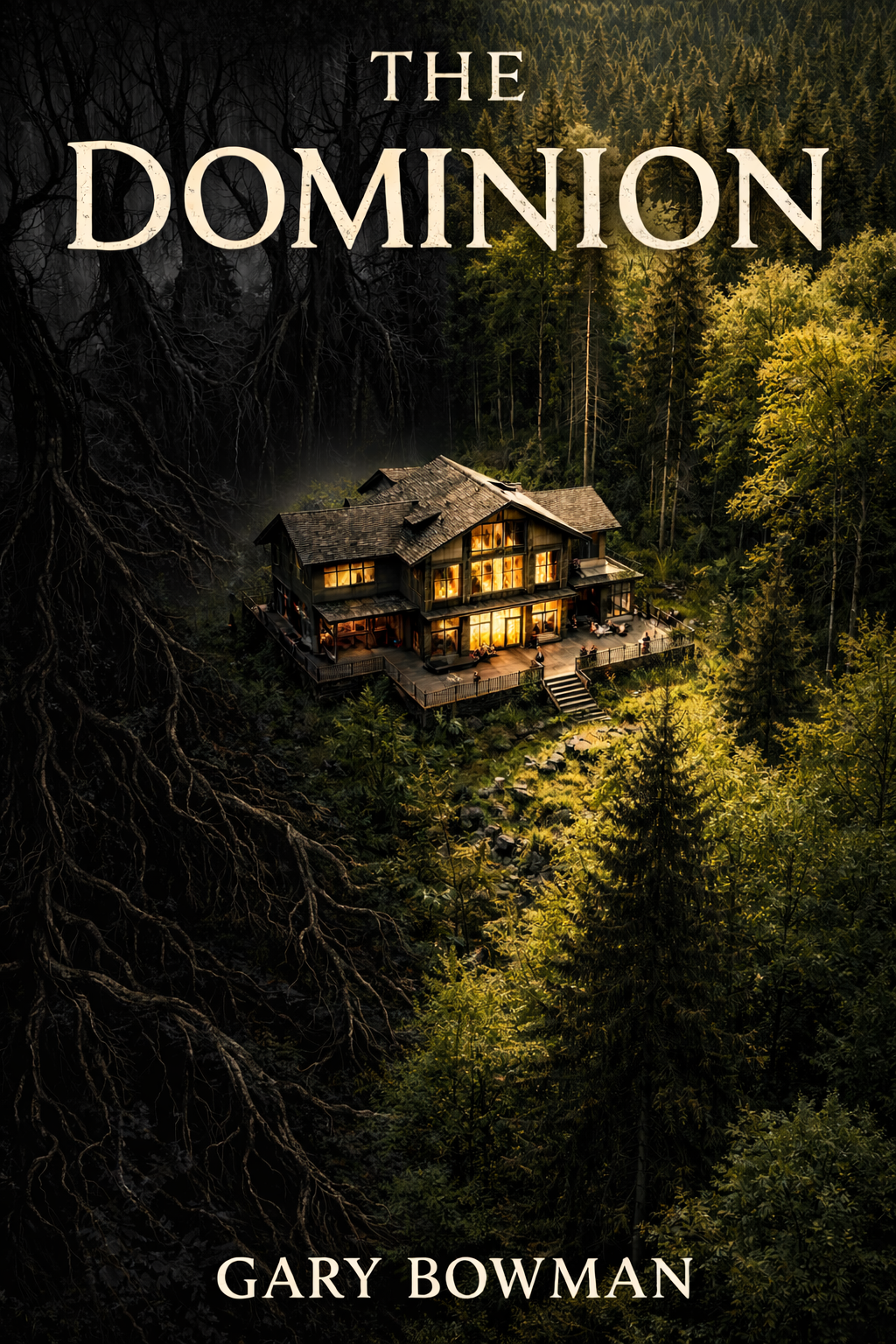
The Dominion
They only wanted a quiet week away.
After a long summer of work, Luke and Mary take their children to a remote cabin buried deep in the woods—a place of glass walls, tall pines, and silence thick enough to feel like peace. For a while, it is exactly what they need. Baseball in the yard. Shared meals. Laughter echoing through timber beams.
Then the book appears.
No title. No author. Handwritten pages beginning with a testimony from 1683—an account of something ancient sealed in ink and blood. At first it feels like a curiosity. Then it begins to change.
Mary’s migraines vanish when she reads.
The internet dies. The road will not lead out. The forest grows closer.
Animals gather at the edge of the clearing, watching.
And the story in the book begins to mirror their lives—too precisely, too deliberately. It does not predict the future. It tells stories. Stories of dominion, of roots older than man, of something that once ruled the trees before people came. The more Mary reads, the more the world outside bends to match the page.
Soon the family realizes the truth: they are not trapped in the woods.
They are inside something.
As the forest tightens around the cabin and ancient forces press against the glass, Luke must fight to save his children—and the woman he loves—from a power that feeds on doubt, memory, and fracture. But some seals are written in blood, and some doors only close when someone chooses not to walk back through them.
In a story where love is tested against something older than creation, the question is not whether evil exists.
It is whether it can be bound again.
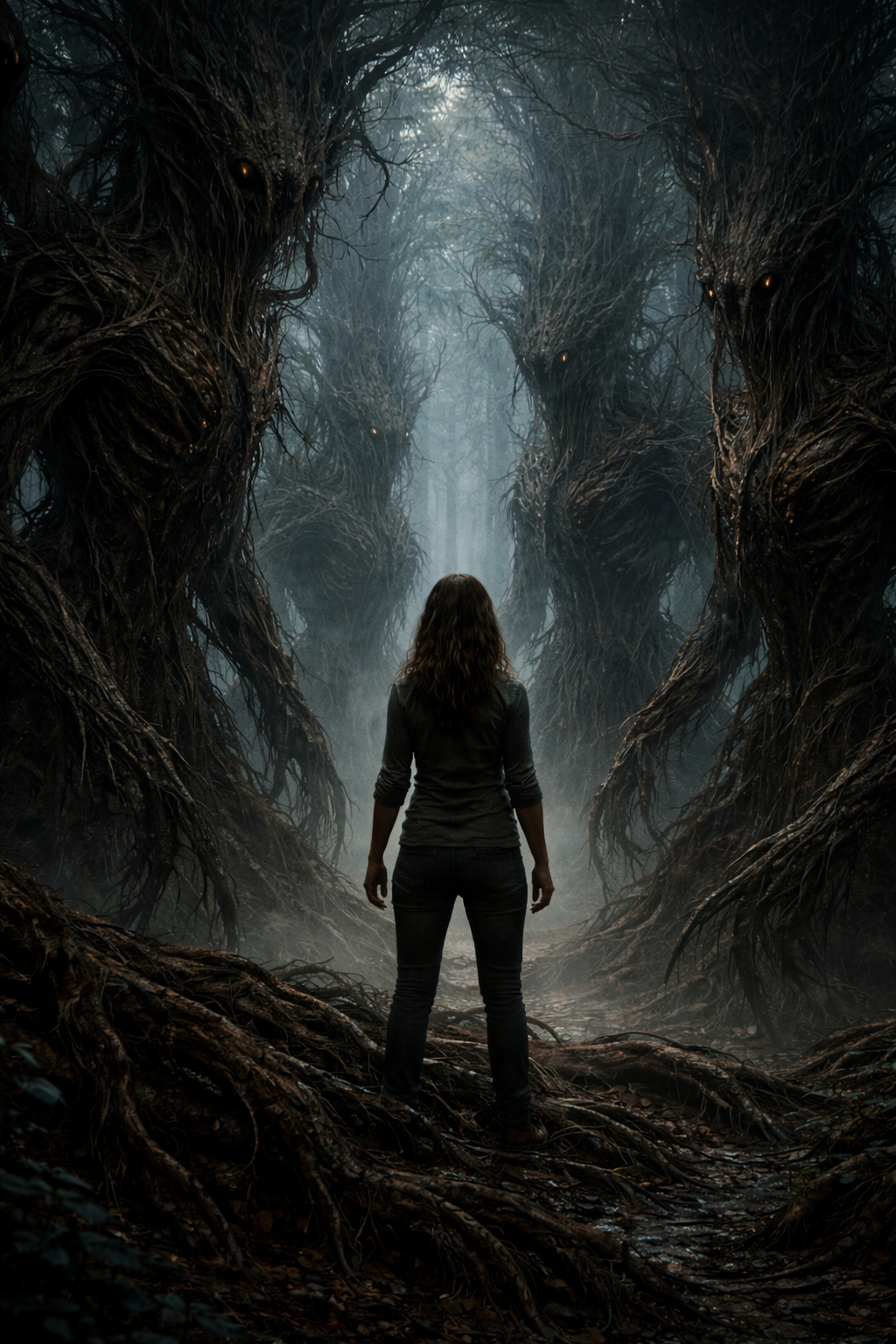
She stood beneath a canopy so vast it swallowed sky. Trees towered beyond proportion, their trunks thick as towers, their bark veined black and pulsing faintly with something beneath the surface. Roots rose from the earth like coiled serpents, knotting and weaving into one another. The air was heavy with the scent of wet bark and iron.
They were there.
Not in shape she could name, but in presence unmistakable.
The elder ones.
They did not resemble beasts or men. They were structure and hunger and age combined. Limbs like gnarled branches, torsos plated in bark that split to reveal dark, sinewed mass beneath. Eyes not round but elongated hollows filled with depthless black. Their movements were slow and deliberate, as though time itself bent around them.
She felt their thoughts.
Not words.
Intent.
Cruelty not as rage but as pleasure. They delighted in fracture. They savored the slow unraveling of living things. They did not kill from necessity; they consumed from appetite. She saw villages swallowed by forest, men dragged screaming into roots, children lifted and crushed without haste. She felt the satisfaction that followed each act, the deep, resonant fulfillment of dominion reasserted.
She tried to recoil, but there was nowhere to step back to.
Darkness gathered at the edges of her vision and pressed inward, not absence of light but presence of something dense and smothering. It wrapped around her limbs like wet cloth. It slid beneath her skin. It threaded into the spaces between her thoughts.
You opened.
The words pressed into her without sound.
You are ours.