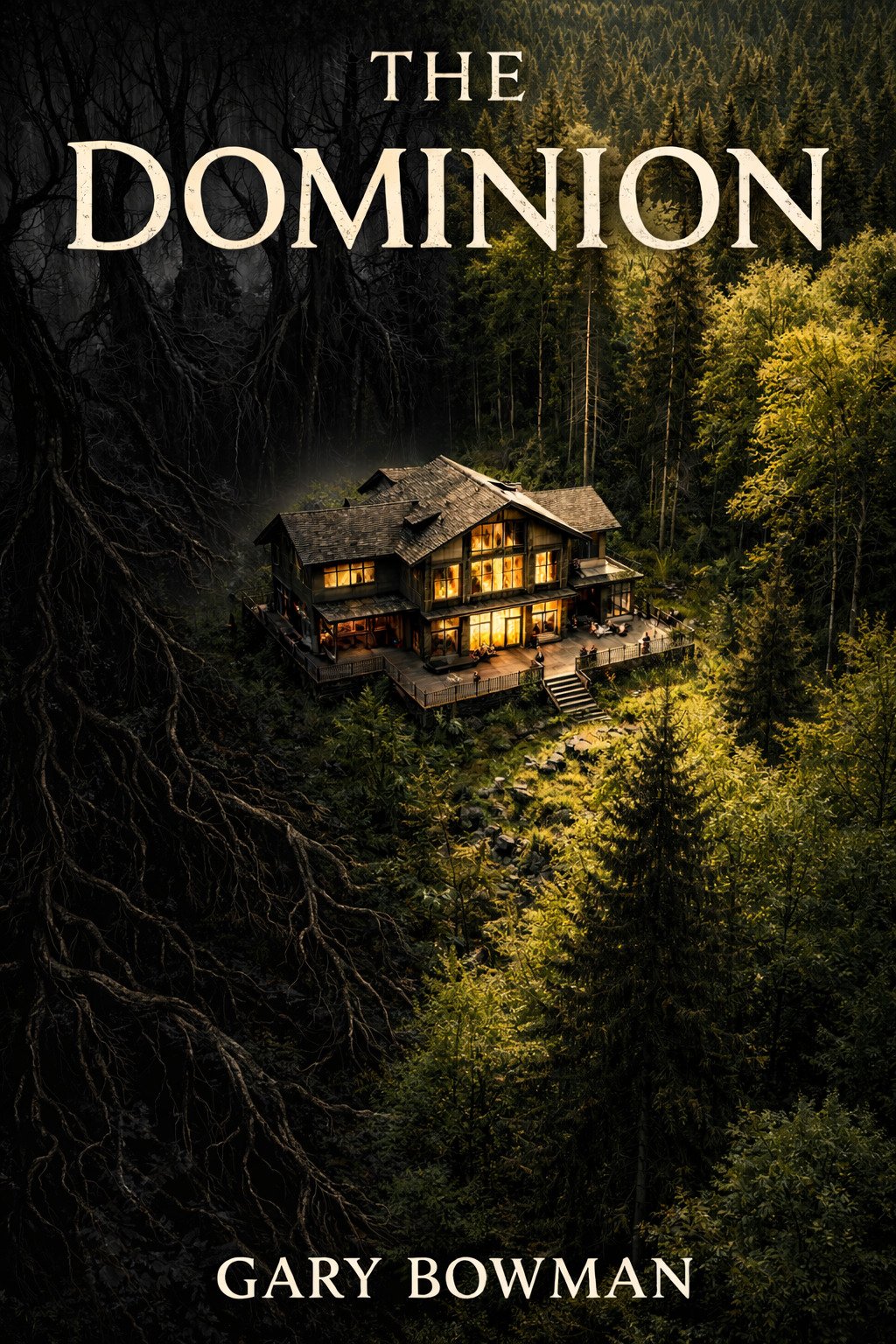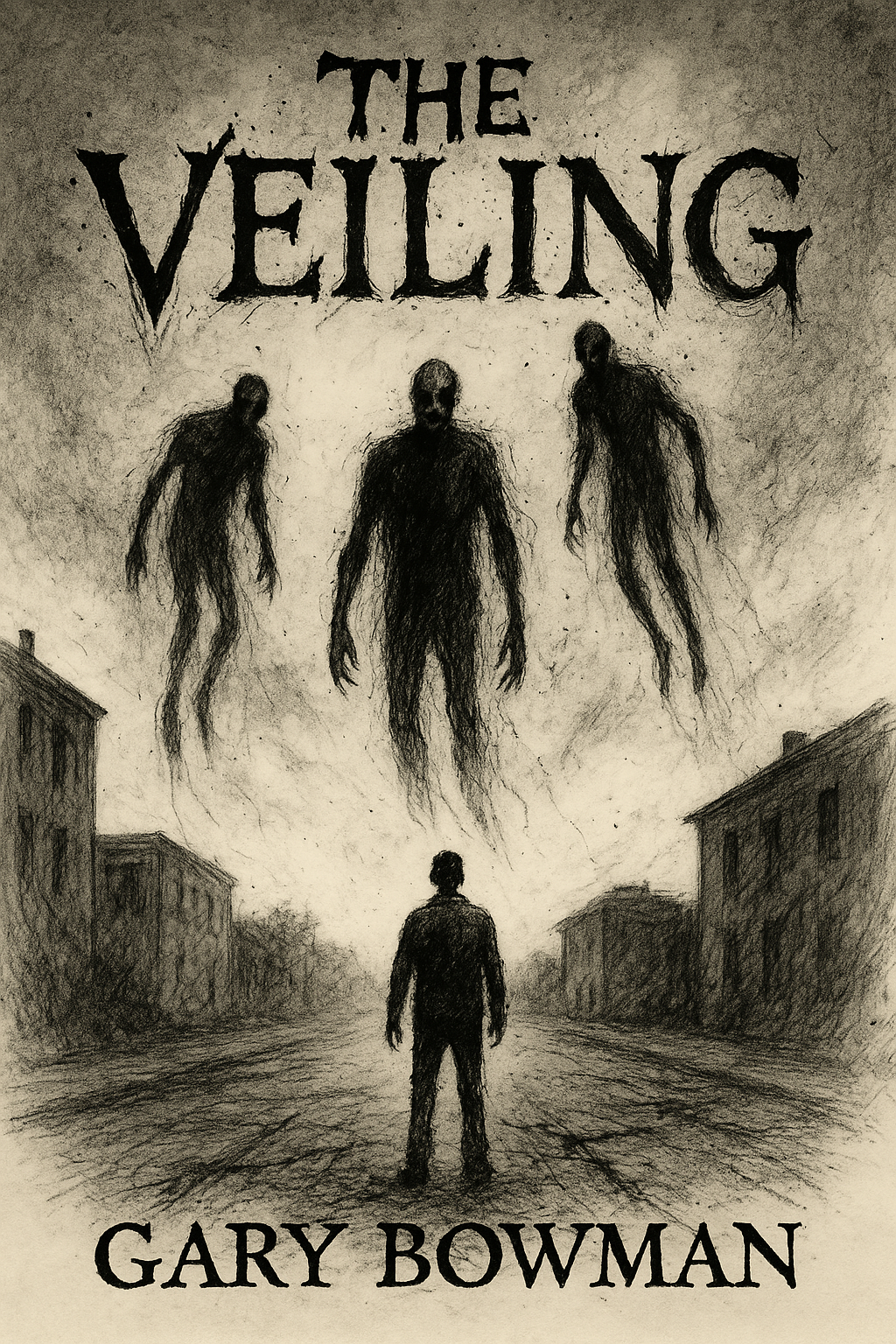
The Dominion
They only wanted a quiet week away.
After a long summer of work, Luke and Mary take their children to a remote cabin buried deep in the woods—a place of glass walls, tall pines, and silence thick enough to feel like peace. For a while, it is exactly what they need. Baseball in the yard. Shared meals. Laughter echoing through timber beams.
Then the book appears.
No title. No author. Handwritten pages beginning with a testimony from 1683—an account of something ancient sealed in ink and blood. At first it feels like a curiosity. Then it begins to change.
Mary’s migraines vanish when she reads.
The internet dies. The road will not lead out. The forest grows closer.
Animals gather at the edge of the clearing, watching.
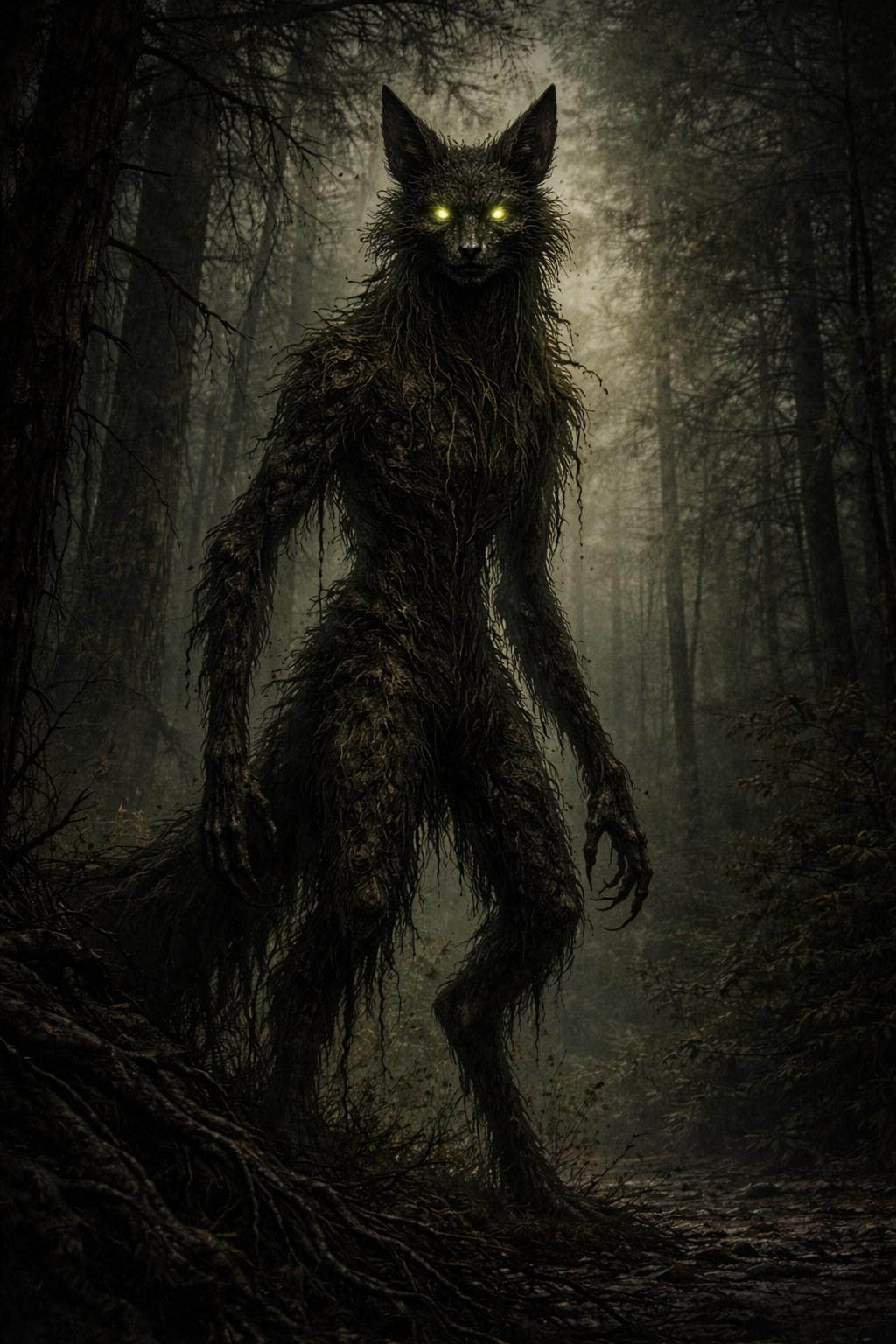
And the story in the book begins to mirror their lives—too precisely, too deliberately. It does not predict the future. It tells stories. Stories of dominion, of roots older than man, of something that once ruled the trees before people came. The more Mary reads, the more the world outside bends to match the page.
Soon the family realizes the truth: they are not trapped in the woods.
They are inside something.
As the forest tightens around the cabin and ancient forces press against the glass, Luke must fight to save his children—and the woman he loves—from a power that feeds on doubt, memory, and fracture. But some seals are written in blood, and some doors only close when someone chooses not to walk back through them.
In a story where love is tested against something older than creation, the question is not whether evil exists.
It is whether it can be bound again.